


 Ada Pertanyaan? Hubungi Kami


 Ada Pertanyaan? Hubungi Kami
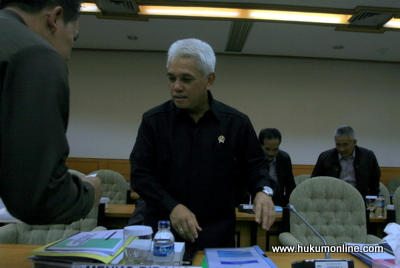 Hatta Rajasa, Coordinating Minister for Economic Affairs, asserted the importance of state-owned companies (BUMN) going through initial public offerings (IPO). Hatta emphasized that the public can buy stocks and strengthen the Indonesian stock market through BUMN's IPO.
"The more, the better," he said in Jakarta, on Monday (8/8).
However, Hatta further added that there will be no IPOs for BUMN in 2011, since there are only four months left in the year. Therefore, the next four months will be the preparation period for IPOs.
"We are short on time. We'll only prepare for the next IPOs, like Semen Padang and other BUMNs," he emphasized.
Hatta further explained that IPOs are aimed at preventing foreign funds from penetrating the portfolio investment. There is a chance that foreign funds will enter Indonesia since the United States' market is currently holding back.
Previously, Standard & Poor's (S&P), an international credit rating agency lowered the US' foreign debt rank, from AAA into AA+. Many believe that this will result in foreign funds penetrating emerging market countries, such as Indonesia.
On the other hand, Hatta's view was rejected by the State-owned Company Worker United Federation (Federasi Serikat Pekerja BUMN Bersatu - FSPB). Arief Poyuono, Chairman of FSPB, questioned the government's statement, which asserted that Indonesia has a strong economic basis. "If we have such strong economy, we don't have to be afraid of foreign crisis," he said to hukumonline.
Arief asserted that BUMN privatization in Indonesia is always related to political agenda, just like the latest IPO of PT Krakatau Steel, which was a hot issue in 2010.
Arief explained that the initial price was too low, and did not comply with market conditions. He asserted that there was a certain power-holder that pushed the price, so that they could gain profit after the IPO process.
"Many political parties and politicians gained profits from the Krakatau Steel privatization," he explained.
Therefore, Arief asserted that the government should not press the panic button regarding the US crisis and the penetration of foreign funds. He said that it is the time for Indonesia and other emerging market countries to replace the US' role in the global economy.
He, however, highlighted Indonesia's lack of strict regulations regarding foreign funds. "We have to make a regulation, so that the stock market is not too liberal. The funds that are being invested in Indonesia can't be withdrawn easily" he said.
(M. Vareno Tarnes / Pirhot Nababan)
Hatta Rajasa, Coordinating Minister for Economic Affairs, asserted the importance of state-owned companies (BUMN) going through initial public offerings (IPO). Hatta emphasized that the public can buy stocks and strengthen the Indonesian stock market through BUMN's IPO.
"The more, the better," he said in Jakarta, on Monday (8/8).
However, Hatta further added that there will be no IPOs for BUMN in 2011, since there are only four months left in the year. Therefore, the next four months will be the preparation period for IPOs.
"We are short on time. We'll only prepare for the next IPOs, like Semen Padang and other BUMNs," he emphasized.
Hatta further explained that IPOs are aimed at preventing foreign funds from penetrating the portfolio investment. There is a chance that foreign funds will enter Indonesia since the United States' market is currently holding back.
Previously, Standard & Poor's (S&P), an international credit rating agency lowered the US' foreign debt rank, from AAA into AA+. Many believe that this will result in foreign funds penetrating emerging market countries, such as Indonesia.
On the other hand, Hatta's view was rejected by the State-owned Company Worker United Federation (Federasi Serikat Pekerja BUMN Bersatu - FSPB). Arief Poyuono, Chairman of FSPB, questioned the government's statement, which asserted that Indonesia has a strong economic basis. "If we have such strong economy, we don't have to be afraid of foreign crisis," he said to hukumonline.
Arief asserted that BUMN privatization in Indonesia is always related to political agenda, just like the latest IPO of PT Krakatau Steel, which was a hot issue in 2010.
Arief explained that the initial price was too low, and did not comply with market conditions. He asserted that there was a certain power-holder that pushed the price, so that they could gain profit after the IPO process.
"Many political parties and politicians gained profits from the Krakatau Steel privatization," he explained.
Therefore, Arief asserted that the government should not press the panic button regarding the US crisis and the penetration of foreign funds. He said that it is the time for Indonesia and other emerging market countries to replace the US' role in the global economy.
He, however, highlighted Indonesia's lack of strict regulations regarding foreign funds. "We have to make a regulation, so that the stock market is not too liberal. The funds that are being invested in Indonesia can't be withdrawn easily" he said.
(M. Vareno Tarnes / Pirhot Nababan)