


 Ada Pertanyaan? Hubungi Kami


 Ada Pertanyaan? Hubungi Kami
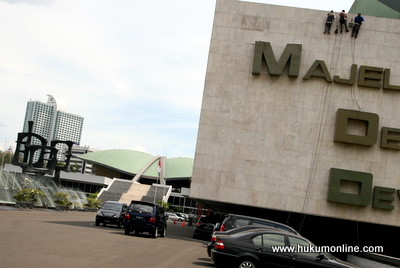 The fourth meeting session of the House of Representatives (DPR) has just concluded. The lawmakers are now visiting constituents in their districts. As an evaluation of the aforementioned session, the Indonesian Parliamentary Center (IPC), published an assessment of the DPR. IPC asserted that the DPR has not been performing optimally, particularly in the law-making process.
Erik Kurniawan, Program Officer at the IPC, viewed that the DPR is only prioritizing parliament-related laws, such as the Political Bill package (General Election Organizing Bill, Political Parties Bill), General Election Bill, and Bill on Judicial Institutions (Supreme Court and Constitutional Court). "The debate was very intense on those subjects," he said, on Monday (25/7).
Furthermore, Erik also said that the parliament only focused on hot issues--those that have heavy coverage in the mass media. Many hearings and meetings were conducted to supervise those issues. However, he said, the supervision was not balanced with improvement of parliament's legislation function.
"The DPR's supervision should have an impact for the state. For example, the results from the Century case hearings should be co-related to improving the state's financial system, like the Financial Services Authority Bill and General Election Mafia. The General Election Special Committee, also, should improve the general election system," he explained.
He also asserted that the DPR did not pay attention to public-oriented issues, such as the Land Acquisition Bill; Zakat, Infaq, and Shadaqah Bill; Illegal Logging Prevention and Eradication Bill; Farmers Protection and Development Bill; High Education Bill; Doctors Education Bill; and Food Bill. Erik underlined that those bills were neglected, even though they were included in the 2009 National Legislation Program.
"Those bills have been discussed; however progress was too slow. It should be realized that if those bills are finished, the public's problems could be resolved sooner," he emphasized.
The DPR, as a reminder, had set its own target at 17 bills for the fourth meeting session. The outcome, however, was very disappointing. The parliament only concluded seven bills: the 2011 State Budget, Currency Bill, Warehouse Receipt System Bill, Commodity Futures Trade Bill, Constitutional Court Bill, Underprivileged Bill, and Establishment of Laws and Regulations Bill.
Marzuki Alie, Speaker of the House, admitted that his institution’s performance was not good enough. "The DPR leadership thought that there should be an improvement in legislation functions, since the DPR has not shown any good results, yet," he said at the closing ceremony of the fourth meetings session, at the DPR Secretariat, in Jakarta, Friday (22/7).
The problem was, Marzuki further added, that sometimes it is really difficult to reconcile with the government. Therefore discussions, from time to time, took a long time.
However, Marzuki asserted that the DPR has had a consultation meeting with the president. They agreed that the DPR and the government will create a more effective way to discuss bills.
"During the meeting, they concluded that the parliament and government will appoint a proper representative to become a vocal point in bill discussions," Marzuki said.
(Ali Salmande / Pirhot Nababan)
The fourth meeting session of the House of Representatives (DPR) has just concluded. The lawmakers are now visiting constituents in their districts. As an evaluation of the aforementioned session, the Indonesian Parliamentary Center (IPC), published an assessment of the DPR. IPC asserted that the DPR has not been performing optimally, particularly in the law-making process.
Erik Kurniawan, Program Officer at the IPC, viewed that the DPR is only prioritizing parliament-related laws, such as the Political Bill package (General Election Organizing Bill, Political Parties Bill), General Election Bill, and Bill on Judicial Institutions (Supreme Court and Constitutional Court). "The debate was very intense on those subjects," he said, on Monday (25/7).
Furthermore, Erik also said that the parliament only focused on hot issues--those that have heavy coverage in the mass media. Many hearings and meetings were conducted to supervise those issues. However, he said, the supervision was not balanced with improvement of parliament's legislation function.
"The DPR's supervision should have an impact for the state. For example, the results from the Century case hearings should be co-related to improving the state's financial system, like the Financial Services Authority Bill and General Election Mafia. The General Election Special Committee, also, should improve the general election system," he explained.
He also asserted that the DPR did not pay attention to public-oriented issues, such as the Land Acquisition Bill; Zakat, Infaq, and Shadaqah Bill; Illegal Logging Prevention and Eradication Bill; Farmers Protection and Development Bill; High Education Bill; Doctors Education Bill; and Food Bill. Erik underlined that those bills were neglected, even though they were included in the 2009 National Legislation Program.
"Those bills have been discussed; however progress was too slow. It should be realized that if those bills are finished, the public's problems could be resolved sooner," he emphasized.
The DPR, as a reminder, had set its own target at 17 bills for the fourth meeting session. The outcome, however, was very disappointing. The parliament only concluded seven bills: the 2011 State Budget, Currency Bill, Warehouse Receipt System Bill, Commodity Futures Trade Bill, Constitutional Court Bill, Underprivileged Bill, and Establishment of Laws and Regulations Bill.
Marzuki Alie, Speaker of the House, admitted that his institution’s performance was not good enough. "The DPR leadership thought that there should be an improvement in legislation functions, since the DPR has not shown any good results, yet," he said at the closing ceremony of the fourth meetings session, at the DPR Secretariat, in Jakarta, Friday (22/7).
The problem was, Marzuki further added, that sometimes it is really difficult to reconcile with the government. Therefore discussions, from time to time, took a long time.
However, Marzuki asserted that the DPR has had a consultation meeting with the president. They agreed that the DPR and the government will create a more effective way to discuss bills.
"During the meeting, they concluded that the parliament and government will appoint a proper representative to become a vocal point in bill discussions," Marzuki said.
(Ali Salmande / Pirhot Nababan)