


 Ada Pertanyaan? Hubungi Kami


 Ada Pertanyaan? Hubungi Kami
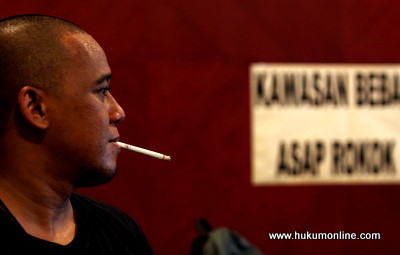 The Indonesian Consumer Protection Institution (Yayasan Lembaga Konsumen Indonesia/YLKI) said that the no smoking area (kawasan dilarang merokok/KDM) regulation in Jakarta, is not effective, yet. Based on a survey conducted by YLKI in June 2011, most of Jakarta's citizensstill smoke in public spaces, such as hotels, restaurants, and private offices, which are listed as non smoking area.
Tulus Abadi, board member of YLKI, explained that the survey was aimed at assessing the public’s understanding of and compliance with Governor’s Regulation No. 88 of 2010 (Pergub 88/2010) on Non Smoking Area which amended the Previous Governor’s Regulation No.75 of 2005. The survey was conducted in 210 places, including 70 hotels, 70 restaurants, and 70 private offices in Jakarta. The survey itself involved 420 respondents.
"Half of the respondents were guests or visitors, and the other half includedemployees in hotels, restaurants, and private offices. We observed and interviewed themdirectly," said Tulus in Jakarta, Friday (1/7).
Further, Tulus explained that the team found more than 57 percent of smokers in hotels, 47 percent in restaurants, and 70 percent in private offices, had violated the Governor’s Regulations. "They smoked in an area that should be sterile from smoke," he asserted.
Many respondents made excuses when they were interviewed by the team. Some of them said that there is no supervision, and some of them said that there was nosmoking sign. "Some of them are even sure that there will be no sanction for them," he said.
On the other hand, Tulus said that the public's understandingabout Pergub 88/2010 is good. More than 60 percent of the respondents are aware of the non smoking area regulation. "Even more, 80 percent of the respondents agree with the regulation," he explained.
Tulus further asserted that the Regional Government of Jakarta should not hesitate to implement the Non Smoking Area Regulation in places that have been regulated under Pergub 88/2010. "The regional government has to impose sanctions on those who violate the regulation," he asserted.
However, strict implementation should be supported by a good complaint service. Non-smokers did not know about the existence of a hotline complaint service for Non Smoking Area violations. "The survey shows us that less than 10 percent of the public did not know about the hotline. Only two percent of the respondents used the hotline. Meanwhile, those who did not call were not sure whether their complaint would be followed up on," Tulus explained.
Therefore, Tulus said, the regional government should improve the complaint service and cooperation withthe private sector, particularly restaurants, hotels, and even malls. "We are sure that the Non Smoking Area Regulation implementation will not kill their business activity. In many countries, Non Smoking Area implementation becomes a significant value forbusiness," he emphasized.
YLKI's view was echoed by Widyastuti Soerojo, an expert fromthe Faculty of Public Health at the University of Indonesia. She said that the implementation of Non Smoking Area will have a positive impact on restaurants, hotels, and shopping centers. "No-smoking restaurants and hotels are becoming a good marketingtool in many countries," she asserted.
Widyastuti took examples from cities in southern Australia; New York, United States of America; and Davao City, Philippines. A study shows that the profit ratio of restaurants and hotels in those cities increased after the implementation of Non Smoking Areas.
Moreover, Widyastuti said that Indonesia already has a hotel and restaurant that implements the Non Smoking Area, the Surabaya Hotel Plaza. Widyastuti admitted that she had an intense discussion with the general manager of the hotel. "The hotel admitted that now they have additional promotional materials advertising the no-smoking hotel. Itis increasing the occupancy rate," she said.
On the other hand, the YLKI survey results were appreciated by Ridwan Panjaitan, Head of Law Enforcement at the Jakarta Regional Environmental Management Agency. "It is indeed valuable input for us," he said.
Ridwan admitted that the KDM regulation should beenforced consistently by the law enforcement apparatus. However, Ridwan also asked for participation from the public so that the Non Smoking Area Regulation could be implemented effectively.
M. Vareno Tarnes / Pirhot Nababan
The Indonesian Consumer Protection Institution (Yayasan Lembaga Konsumen Indonesia/YLKI) said that the no smoking area (kawasan dilarang merokok/KDM) regulation in Jakarta, is not effective, yet. Based on a survey conducted by YLKI in June 2011, most of Jakarta's citizensstill smoke in public spaces, such as hotels, restaurants, and private offices, which are listed as non smoking area.
Tulus Abadi, board member of YLKI, explained that the survey was aimed at assessing the public’s understanding of and compliance with Governor’s Regulation No. 88 of 2010 (Pergub 88/2010) on Non Smoking Area which amended the Previous Governor’s Regulation No.75 of 2005. The survey was conducted in 210 places, including 70 hotels, 70 restaurants, and 70 private offices in Jakarta. The survey itself involved 420 respondents.
"Half of the respondents were guests or visitors, and the other half includedemployees in hotels, restaurants, and private offices. We observed and interviewed themdirectly," said Tulus in Jakarta, Friday (1/7).
Further, Tulus explained that the team found more than 57 percent of smokers in hotels, 47 percent in restaurants, and 70 percent in private offices, had violated the Governor’s Regulations. "They smoked in an area that should be sterile from smoke," he asserted.
Many respondents made excuses when they were interviewed by the team. Some of them said that there is no supervision, and some of them said that there was nosmoking sign. "Some of them are even sure that there will be no sanction for them," he said.
On the other hand, Tulus said that the public's understandingabout Pergub 88/2010 is good. More than 60 percent of the respondents are aware of the non smoking area regulation. "Even more, 80 percent of the respondents agree with the regulation," he explained.
Tulus further asserted that the Regional Government of Jakarta should not hesitate to implement the Non Smoking Area Regulation in places that have been regulated under Pergub 88/2010. "The regional government has to impose sanctions on those who violate the regulation," he asserted.
However, strict implementation should be supported by a good complaint service. Non-smokers did not know about the existence of a hotline complaint service for Non Smoking Area violations. "The survey shows us that less than 10 percent of the public did not know about the hotline. Only two percent of the respondents used the hotline. Meanwhile, those who did not call were not sure whether their complaint would be followed up on," Tulus explained.
Therefore, Tulus said, the regional government should improve the complaint service and cooperation withthe private sector, particularly restaurants, hotels, and even malls. "We are sure that the Non Smoking Area Regulation implementation will not kill their business activity. In many countries, Non Smoking Area implementation becomes a significant value forbusiness," he emphasized.
YLKI's view was echoed by Widyastuti Soerojo, an expert fromthe Faculty of Public Health at the University of Indonesia. She said that the implementation of Non Smoking Area will have a positive impact on restaurants, hotels, and shopping centers. "No-smoking restaurants and hotels are becoming a good marketingtool in many countries," she asserted.
Widyastuti took examples from cities in southern Australia; New York, United States of America; and Davao City, Philippines. A study shows that the profit ratio of restaurants and hotels in those cities increased after the implementation of Non Smoking Areas.
Moreover, Widyastuti said that Indonesia already has a hotel and restaurant that implements the Non Smoking Area, the Surabaya Hotel Plaza. Widyastuti admitted that she had an intense discussion with the general manager of the hotel. "The hotel admitted that now they have additional promotional materials advertising the no-smoking hotel. Itis increasing the occupancy rate," she said.
On the other hand, the YLKI survey results were appreciated by Ridwan Panjaitan, Head of Law Enforcement at the Jakarta Regional Environmental Management Agency. "It is indeed valuable input for us," he said.
Ridwan admitted that the KDM regulation should beenforced consistently by the law enforcement apparatus. However, Ridwan also asked for participation from the public so that the Non Smoking Area Regulation could be implemented effectively.
M. Vareno Tarnes / Pirhot Nababan